
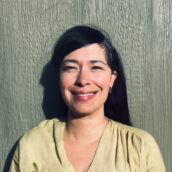
Season 04 – Episode 104: Birth, Grief and the Threshold Moments of Life, with Anouk Wehli
By The Gifts of Trauma /
Listen this episode here:
or here
What do birth and grief have in common? For Anouk, they are different sides of the same coin; threshold moments where our bodies already know what to do, if our minds allow us to trust the process. Anouk’s life has so many facets, layers, and redirects that it would have been easy for her to overlook the consistent theme, which is simply: “Everything was meant to happen.”
In this warm and wide-ranging conversation, Anouk explores:
- What shifts grief from a natural and healthy human experience into pathology
- What seeing birth and death as different sides of the same coin, taught her about life
- How becoming a parent can activate unprocessed transgenerational wounds
- What it means to grow up as a “third culture kid”
- How her multicultural inheritance, Korean, Swiss and Taiwanese, shapes her perspectives
Throughout this interview Anouk shares many of her beautiful facets: Two decades running a children’s forest school. A lifetime of crossing cultural and emotional thresholds. Her work in ‘The Portal.’ A concept she calls Essence Recovery. And at the end, the gift she offers to anyone hesitating at a life threshold is simple and steadying: “You’re not alone in this.”
Episode transcript
00:00:00 Anouk
When I use these words of recovery, I notice that I’ve always been here. I’ve been here from day one as a child. Like all these memories that can come up, there’s always this part of me that’s always been there and brought me to where I am today. And I truly believe now that we all have… Some people use that image of a flame, how our inner flame might just kind of go down like a Bunsen Burner, just make it really small, but we can actually make it big again. I truly believe that something keeps us here, a part of us keeps us here in this world and wants to be here. And so, when we can reconnect to that part, when we recover that part, when we kind of dig through everything that’s been dumped on top of that part, then we can truly, actually live a life with meaning and with purpose and with joy, regardless of what happened. I think when we start to notice that all our adaptations are not who we are, that’s when we can truly be ourselves.
00:01:16 Rosemary
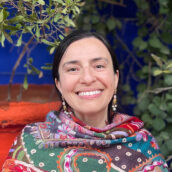
This is the Gifts of Trauma Podcast, stories of transformation and healing through Compassionate Inquiry. Welcome to the Gifts of Trauma podcast by Compassionate Inquiry. I’m Rosemary Davies -Janes, and our guest today is someone who not only supports the Compassionate Inquiry community in a multitude of ways, but is well known and loved by many. Anouk Wehli, thank you for joining me today.
00:01:54 Anouk
Thank you for having me.
00:01:55 Rosemary
It’s a total pleasure. Now, I’d like to use a practice that comes into play in every Compassionate Inquiry session by sharing my intention. And really, it’s very simple. It’s just to hold space for you to share your journey of healing and the gifts that you’ve found within your wounds as you walked your path of learning, healing, and supporting others in doing likewise. Do you have an intention you’d like to share with us? And if you don’t, that’s totally okay.
00:02:25 Anouk
My intention is to be here and answer all the questions that you have, to maybe also get to know myself better. Who knows what will come out?
00:02:33 Rosemary
I love that. Thank you. Now, Anouk, on your website you say you bring a unique synthesis of clinical expertise and lived experience to the fields of growth and development. You also say that as a psychotherapist, a Compassionate Inquiry practitioner, a trained midwife and grief specialist, your work is rooted in the belief that our personal histories and professional lives are fundamentally interconnected. Anouk, I am so looking forward to exploring this terrain with you. And rather than reading your full bio, I’d like to invite you, if there’s anything you’d like to share about yourself as we begin. That is perhaps included in your bio, which is listed in full in the show notes, or perhaps never shows up in a bio.
00:03:23 Anouk
I think I would like to just sum up everything that I do, both professionally and personally lived, as everything that just was meant to be, meant to happen. Because I wouldn’t be here today, I’d be elsewhere, probably teaching. I always personally wanted to be a teacher as a child, and imagine just being a schoolteacher in primary school. But I teach differently now. I get to teach adults instead of children, although I did work with children. But in the end, everything that happened has brought me here today, where I am, doing what I do. And I’m very grateful to have the lived experience to also refer back to, because I think there are some things that cannot be learned cognitively. We can understand it cognitively, but to really understand it, somatic level, or a more emotional level, I truly believe it’s easier if we have a connection.
00:04:19 Rosemary
Yes, I agree. And I was thinking, I was listening to your answer and smiling because what are adults? We’re just old children, if you could look at it this way. And we bring our younger selves with us. So I’m very glad you had that leaning into teaching. And it’s valued by so many. Now, your professional title that you prefer is, a traumatologist. So I’m curious. As I was doing my research about you, I came up with a name for the scope of your work and I wonder how it lands with you, because it seems that what you do spans birth, grief, and also the threshold moments in life.
00:05:00 Anouk
Yeah.
00:05:01 Rosemary
So as you work with both ends of life, what has standing at those thresholds taught you about what’s in between?
00:05:10 Anouk
I’ve never thought about it. I think right now what comes to me is one of the things I’ve always been good at is just a sitting and waiting, not a pushing or, no pun intended as a midwife, but that just a waiting and waiting for whatever’s gonna come next and trusting the process. So I’ve never worked in palliative care or end of life care, but I work with those who have experienced loss, if it’s bereavement or even other types of losses, but just trusting the process of… Our bodies know what to do, they know how to birth, they know how to be born, and they also know how to take the last breath. So it sounds simple, but it’s not easy to do. Right?
00:06:00 Rosemary
What is that saying? That it’s simple but not easy? So, yes, that would summarize it. So I’m happy you referenced your work as a midwife because I imagine you’ve attended many births. So when you think of those, you think of your own birth experience, you think of your children’s births. How have these experiences shaped how you support your perinatal clients?
00:06:25 Anouk
I just want to say I haven’t worked as long a career as our two Portal Founders. You know, they’ve done way more midwifery work than I have. But the short chapter that I’ve worked, I think, what’s helped me is understanding… So when I went off to study midwifery, here in Switzerland, it’s a bachelor’s. It helped me understand the cognitives, academic and evidence based teachings, birth work, and at the same time, it all mainly just confirmed everything I’d already known. I worked as a birth doula before becoming a midwife, and we learn a lot there about traditional midwifery, which is just so wonderful, because I hardly barely learned anything in midwifery school at university. And then before that I had four home births and I also had two miscarriages. And so that was for me, one of the biggest teachings in life of birth work, and being with midwives as a mother, birthing. Being supported in postpartum pregnancy care, everything that belongs to it, that was my teaching. And I had a natural curiosity as well. So I think if the curiosity is not there and I just come in as a client, or some people would say patient, but just coming in as a mother and then leaving again, it would have been a different experience. But I knew the first moment my very first midwife walked into my apartment. I looked at her and I just said, I know her. I don’t know from where, but she seems familiar. And I just trusted her 100%. And later on, she was a vital part of me going down my midwifery journey, which started 20 years before I actually went off to study.
00:08:17 Rosemary
Wow, so interesting. Someone shows up in our life and it’s not that they have an aura or something, but we sense that this person is going to be pivotal in the course of my life path. So thank you for sharing that. You also mentioned The Portal, which you and I know is a training offered by Compassionate Inquiry. I wonder if you could share more about that so people get a sense of what it’s about and what it offers.
00:08:44 Anouk
Yeah. So the portal is a training that Compassion Inquiry offers twice a year. It’s for professionals who are interested in any type of perinatal work, from family planning to conception to pregnancy to births and then postpartum and early years. It doesn’t have to be somebody working in the perinatal field. I just want to mention that as well. It’s just anybody working with a client or anyone holding space, maybe a yoga teacher, craniosacral worker, just anyone. And we work with anything that is connected to perinatal experiences. We get together for about seven months, there’s a short four week training on the Compassionate Inquiry competencies and then we dive deep for the last six months to look at everything that the world has to offer when it comes to growth work all the way also to loss. And yeah, I can highly recommend it if it’s something that interests you personally and you may or may not need it. It’s just something else to add to your toolkit as a professional.
00:10:00 Rosemary
Thank you. Now, is prior training, is the year long professional training, a prerequisite for people coming into The Portal or is it something that offers that structure in a different way?
00:10:15 Anouk
So there is no prerequisite except to be a professional, working with clients or groups. So anyone can join who works with clients again and they teach in those first four weeks that I mentioned, they teach very quickly. If you want to dive deep into the competencies of CI, I recommend the professional training, but we look at every module that you would learn and get an idea of what we’re dealing with here when it comes to Compassionate Inquiry and the competencies of being present and learning to be attuned and listening to your client.
00:10:52 Rosemary
It sounds like the first midwife you encountered had all of that very naturally as part of her toolkit. Now, just to stay in this birth realm for a few more minutes, when people experience a difficult birth, I’m just, I’m wondering, can they name what they’re carrying? Or perhaps a better question would be, can you distinguish between a birth gone wrong and birth trauma? Is there a distinction there?
00:11:19 Anouk
I think one of the biggest gifts of myself being a mature student midwife was that I would often be standing there in the labor room and observing the anesthesiologist, the senior OBGYN, the midwife on duty, or any hospital staff who just had time and was around in the middle of the night, who could come support a nurse. I would observe how everybody was experiencing their own perception of what was happening. And the mother, often, if she was just doing her thing and trusting the process and in her flow, she didn’t notice anybody, which was great. But often I would notice that when we start intervening in a birth process, because we believe something needs to be done, or something’s not working the way we would like it to. It becomes a very subjective experience, in my opinion. We can, as professionals go, ‘Wow, that was close.’ And the mother has no idea that we were very close to maybe saying, hey, we need to get this baby out right now. And she’s just like, ‘That was a great experience. And thank you all so much.’ And she goes home and has no idea. Or it can be the other way around. A mother is very dissatisfied with the way everything went. And then we all think, but that was great. So it’s a hard one. It’s a hard one. And as a student midwife, I observed a lot of situations where I would go, why don’t we all just pause for a moment, take a deep breath. But everybody was very dysregulated, and I believe things went wrong because of that. As an assisting midwife in home births and also the many years I worked as a doula at homebrisk, I’d never once experienced anything like that. Because they’re also the type of people to do that kind of work with a lot of trust in the process. Yeah. And self awareness. A lot of self awareness, if I may add.
00:13:22 Rosemary
Yeah, yeah. And attunement. You painted two very contrasting pictures. And it reminds me my daughter, well, she had her first child last year and there were many players involved and she had a nurse tending to her. It was her first day and didn’t really understand how to read the amount of dilation and thought she wasn’t really dilated and she needed to wait. And she was extremely dilated. And I think it’s really important to frame it the way you did that everybody involved, and there are a lot more people involved in a hospital birth, than in a home birth. Everyone’s got their own perspective. I imagine this new nurse was nervous, I’m guessing. I don’t know what was going on, but anybody doing that for the first time, there would be some nerves and worry about getting it wrong, getting it right. Looking good, looking bad. So many different players involved. I think that’s a really useful perspective you shared. Thank you. So, dancing again with the grief and birth. Is there a grief that lives specifically in birth, even a healthy, wanted birth?
00:14:32 Anouk
Great question. Personally, I have learned to see everything as… Well, grief is a natural and normal part of life. That’s how I work with grief. And any change of any type in life is going to involve a certain amount of grief. But grief is healthy. Grief is great if we only embraced it more and also allowed just being with it more. I think we’d also have fewer pathologies, to be honest, because when you’re expecting to become a parent, that on its own brings a whole bunch of change. And sometimes the change is, there’s no turning back. That can bring up a lot in people, and sometimes I will end up spending more time listening to someone share and lament what’s never going to be.
00:15:24 Rosemary
Yeah.
00:15:24 Anouk
And becoming a parent in whatever way we choose to. Right? Biologically or adoption or foster parenting or watching our family’s children because somebody else can’t. Their parents can’t. This will bring up a lot of the untouched transgenerational stuff, because it’s going to activate all the imprints of what hasn’t maybe been looked at yet or what’s always been there, but we’ve never noticed. And it’s going to change our awareness, or at least the invitation’s there.
00:15:59 Rosemary
Yeah, very true. Now, Anouk, infertility and conscious conception are parts of your work. And I’d like to invite you to speak about both separately. What can the grief of not conceiving or the very intentional act of choosing to conceive, like, what can each of those look like through a trauma lens?
00:16:22 Anouk
So what I’ve experienced and I haven’t seen it all, but what I have seen till now, and also what I’ve read about, and as a team, we often talk together. Right. And we have forums and we share with each other. But often what you’ll usually hear is infertility means a certain way of life that one did not plan. And this comes in many forms. But just, I’m going to generalize it like that, if that’s okay. And honoring that someone else might not also resonate with what I’m saying. And I invite everyone to always share and speak out about their journey, because it’s only when we can listen to each other, learn from each other and hold each other that we can then also become more whole. So often it’s taking a path of maybe not having a biological child that one wished for, or nowadays, many women choose to have a child without a father or a second parent, and they’re happy doing it on their own. Everything is changing. It’s really fascinating for me as well to notice how many different ways there are to become a parent. At the same time, I encourage people to hold space for what didn’t get to happen, that they had hoped for, dreamt about, planned to do. All of that is grief. So if we don’t acknowledge our grief, I believe that usually then it starts to become a little more complex. And everything that we repress or push down, deny, ignore, will show up in other ways. That’s maybe around infertility and then conscious parenting or conscious conception.
00:18:07 Rosemary
That’s right, yes.
00:18:09 Anouk
Thank you. So conscious conception starts way before we even start. We encourage. As in The Portal, we also talk about this. We encourage people to start their own work, start their own self awareness, their own journey, their own birthday, their own birth journey, when they were in gestation in their mother’s womb. We encourage people to start as soon as it’s something you consider, maybe one day I’d like to have kids or try to have kids. That’s when we say, that’s when that consciousness is brought to the surface and we look at, what was my journey like? Maybe what was my mother’s? My grandmother’s? We want to become more aware of how we’re moving through all of this. And maybe just working on some unresolved or incomplete transgenerational themes might pop up as we just bring awareness to it all. So that’s what I would say.
00:19:10 Rosemary
Thank you. And you’ve got a very rich facet that I am looking forward to digging into with the transgenerational aspect, but pathological. Can you expand on that for me, please?
00:19:25 Anouk
Sure. So when I say pathological, what I mean is it becomes more complex than it needs to be. It’s like a cut, a simple paper cut. Best case scenario, there’s a scab that grows and it heals. Voila, 48 hours later, it’s doing well and we could move on. Worst case scenario, blood poisoning, and die. I’m just saying, right? When I say pathological, I just mean in between that. We have this space of different degrees of how our wounds will heal if we have a normal reaction to something. I always use this example when I work with clients. We’re eating ice cream. We’re a child again. We’re eating ice cream when our ice cream falls. How were we met? Did the person who bought us the ice cream say, ‘Oh, look at that, your ice cream fell. Oh, you must be so sad.’ You know, they’re empathetic. They’re validating our experience. They’re holding us in our emotion of disappointment and maybe some sadness and it’s okay, ‘That’s normal. It happens.’ Right? We might say, let’s get another one. We might say, you can share mine. We might ask, do you want another one? There’s so many different ways we can meet that child. But if we have a parent or a caregiver that looks at us and says, ‘Why did you do that? Why weren’t you careful? You should have been more careful holding your ice cream. I told you to watch out.’ Or something along the lines of, look what you just did. Well, sucks to be you. You’re not getting another one. If we’re met in ways that are not empathetic, that are blamey, that are their own projections at the end of the day, how they’re dealing with watching us in our emotion, then that’s going to imprint on us. And if we grow up thinking, ‘Too bad, you should have been more careful.’ That’s also how we’re going to move through the world. Right. And then, of course, when we become parents, that might be how we speak to our kids, even though we don’t want to. So that’s when it can become pathological. It’s when that lack of empathy turns into a more deeper issue where we can’t connect to other people, we can’t become intimate, we have a harder time being vulnerable. That’s what I mean when I say pathological.
00:21:44 Rosemary
Yeah, that explains it perfectly because it’s not necessarily so much what happened. It’s not like we’re necessarily going to boycott ice cream forever, but it’s how what was said to us lands inside us and how that shapes how we see life, how we see ourselves, how we see other people. It’s so interesting that something that small can shift a child’s perception of themselves and what is okay and what’s not okay and how to behave and ‘turning pathological.’ I love how you reframed that. And it’s almost like the wound that won’t heal, if you will.
00:22:26 Anouk
I like that. Yeah, exactly.
00:22:28 Rosemary
Yeah.
00:22:29 Anouk
And then it becomes the norm. Right.
00:22:31 Rosemary
I’m just wondering, can you see any broad scale shifts in how we show up as humans, how we show up as parents, how we show up as cultures that could stem the pathology of grief? I’m asking you to look forward and say, is there any kind of shift that would take care of it in the present? So it’s not something that 20, 30 years later leads someone into a therapy situation.
00:22:56 Anouk
If I can mention other cultures, in other cultures other than the Western, especially Anglo Saxon cultures, it’s very normal when someone. I’m just going to use bereavement here that when someone dies, it’s very normal for some cultures to throw oneself into the despair of losing someone and letting it out. So crying, wailing, behaving a certain way. And I think that we tend to have a lot of shame around that in our Western Anglo Saxon cultures, which shame is actually a symptom. I am starting to learn that if we could work with that, we would be able to process it, viscerally process that shame, but then also the grief because we feel so much better. There are trends I see on social media sometimes when my kids are doing their things and it’s people getting up and dancing, I’m like, but that’s the most normal thing to do in some cultures, like you just dance. And in some other cultures it’s obviously not an easy thing to do. So I think if we just take that example of, let’s just cry and scream and stomp and lay on the floor and pound the floor with our fists and not worry about what other people think, I think that would be a very healthy way to deal with our grief, so that later on in the future we don’t have to go talk to somebody. Right?
00:24:29 Rosemary
Yeah.
00:24:29 Anouk
I don’t know if that helps. But I can always say most cultures where grief is normalized, loss and funerals and rituals and ceremonies are normalized part of everyday life. So much so that you’re just like, oh, look, there’s a funeral when you’re walking down the road. But it’s just part of life. We don’t put it away. We are more resilient, it’s more normalized. We’re not asked to move on. We can just integrate it in life. And yeah, then I think we would have fewer work, maybe for us grief specialists, but we would have more, I think, ease being with grief.
00:25:04 Rosemary
I agree. What I saw as you were speaking is, oh, there’s a wedding, oh, there’s a funeral. It’s just very normal. Oh, there’s someone walking their dog. Oh, there’s children playing in the park. It’s just what is. So I love that… last question on grief.
00:25:20 Anouk
Sure.
00:25:21 Rosemary
I am curious, when you are dealing with grief personally, you are a grief specialist, does that impact how you process your own grief at all? Or is it, that’s what I do professionally. This is personal. I’m a human being. I’m processing this like every other human being.
00:25:40 Anouk
So I must admit, I myself was once in grief counseling, when my father died unexpectedly. It was about 13 years ago and it was only because I knew there wasn’t anything wrong with me, but I knew I needed support. So I reached out and then somebody recommended this woman, a Swedish woman, and she was living in Zurich, shout out to Karin in case she’s listening. She changed my life because she normalized grief for me. And she sat with me and worked with me for about two months, every week. And it was so helpful. And from that moment on, I knew, okay, I’m okay. I’m normal. This is all right. And I went on with life in a different way, more aware, more conscious about how I wanted to move through life. Then when I started working as a doula, I realized birth and life are part of the same coin. And so I wanted some skills in grief work. And I ended up going into the training of the woman who sat with me when I was a griever. So it’s really nice to look back at my grief journey and how I came to be where I am today. But ever since then, I know when I’m grieving and I know when I need support in a therapeutic sense. So, yes, it is helpful to know what I know and. And to have trained in it, because I can sit and be with it. And I think the more I sit with my grief, which is an everyday thing, I always say it might be something as simple as, well, they don’t have my favorite yogurt anymore or my favorite restaurant closed or… Right? It’s just a little moment, but also not dismissing it or brushing it off. I try not to do that anymore.
00:27:24 Rosemary
Thank you. And since Karin is offering trainings, if she still is, I’d be happy to put a link to that in the show notes, because it sounds like that was really helpful for you.
00:27:34 Anouk
Thank you.
00:27:35 Rosemary
Yeah. When you were talking about in different cultures, grief can be a very normal thing. I’d like to speak about different cultures now, because, Anouk, you come from a multicultural family, and I’m wondering how your own inherited history has shaped the way that you understand trauma across cultures and across generations. It’s a big question. I know.
00:28:01 Anouk
I think everybody dealing with some kind of wounding, whether it’s personal or transgenerational, is going to deal with a lot because we’re kind of multicultural anyway nowadays, our world. And I learned about 25 years ago that culture can also be same country, same states, same language spoken, just a different village. That can be a difference in culture. So, personally, I would say there are like extra levels or extra factors involved. It’s obvious. For example, in binational relationships, you’ll see two people who speak the same language, come from the same country will possibly experience different things than two people who come from two different countries who speak two different languages. That’s just a fact. There are just a few more, maybe barriers in the way that need to be worked with.
00:29:01 Rosemary
There are things that you expect to be very different when there’s different races involved, but there can also be very many different things within the same culture, within the same race, within the same city,
00:29:17 Anouk
municipality. Exactly. Yeah. Yeah.
00:29:20 Rosemary
Now, I’d like to just turn to your grandmother for a moment.
00:29:24 Anouk
Sure.
00:29:25 Rosemary
I had a dear family member who also lived to 101, so that sort of lands in a very special place for me. And your grandmother carries a living memory of the Korean War within her. And I’m wondering what it’s been like to hold that history in your body as her grandchild, as a therapist, as a mother.
00:29:47 Anouk
I’m going to add on an extra year. So she’s 102 now.
Rosemary: Oh wow, awesome
Anouk
Yeah. But her health has deteriorated this past winter. I don’t have that relationship with her as I would have liked to have. She speaks Korean. She doesn’t speak English. My mother was often the translator or my grandfather, her husband, or cousins, or uncles and aunts. She didn’t speak any English. And I never spoke more Korean than what I did as a baby / toddler. And then it all turned to English. Once my sister and I went to the international school. But how we experienced each other was something I still remember. And I still feel how she smiled at me, how she touched me, held me, gave me food, you know, everything nonverbal. My mom said. I remember when I first… I think my first child, because my grandmother birthed naturally, and at home, I think all of the kids, I’m not 100% sure, but apparently she told her mom and she was like, see? And she was super proud of how I’d done it. And I remember thinking, aww, there’s someone else like me out there. And that’s really precious. But I also know some family history, and I know that there has been a lot of hardship. And it’s still, I believe, energetically in the field. It hasn’t been dealt with. Because every time there’s the topic of war, anytime there’s any kind of topic of oppression and women, it brings up a lot of me, and I feel it every time. Even reading about other wars, or hearing about other people and women and sex slavery, sex crimes, it’s just terrible. And I just noticed that it’s still there. And I trust that when the time is right, we will work on it. At the same time, I also know that the female lineage, Korean lineage, has also been through so much that all I can do is focus on myself and working on what I can do to be able to kind of change what’s been happening till now. So the future lineage could have maybe as Gabor says, that degree less of trauma. Yeah, yeah.
00:32:08 Rosemary
It’s something that goes back very deep. So, thank you for sharing.
00:32:13 Anouk
It does, yeah.
00:32:14 Rosemary
He used a phrase that I think our audience might not be terribly familiar with. You said you grew up as a third culture kid between Taiwan, Hong Kong, a Korean mother and a Swiss father. So I’m gathering that a third culture kid is some kind of cultural in betweenness. I wonder if you could speak to that.
00:32:35 Anouk
I like that. In betweenness. Yeah. A third culture child is someone who grows up neither in the culture of their mother or father. I didn’t grow up in Switzerland, I didn’t grow up in Korea. I grew up in a third culture that didn’t belong to either of them. It’s where I identified as home, Taiwan. And I basically, I have a Taiwanese stepmother. I spoke Mandarin really well back in high school. I understood a lot. And at the same time, I believe that one of the experiences I had that was hard for me to process was the inability to integrate because I wasn’t Taiwanese. But when I meet Taiwanese who were born and raised in, often it’s America, so in the States, I’m more Taiwanese than they are because I grew up there and I know so much. And at the same time, I don’t have any kind of blood relation to Taiwan, but I grew up there. It’s still an experience I’m processing, but able to understand better since I joined the BLAIPOC Compassionate Inquiry bi weekly group, which is the Black Latinx Asian Indigenous People of color group run by the Vimalasara, where we talk about these things and these conversations are very welcome and very open.
00:34:04 Rosemary
Thank you for sharing that. I think it’s a really good point because I myself was one of those children. I was born in Canada and I wasn’t raised in Canada and I was raised in a country that neither of my adoptive parents were from. So I relate to that. But because we’re all white skinned people and it was white skinned people where I was raised, there shouldn’t be anything to deal with. There shouldn’t be anything to worry about. But there is very much an in betweenness and I just thought it was worthwhile flagging that because I have actually felt drawn to that group and it’s not for me because I am in a white skinned body. So yeah, very interesting. Thank you for sharing. And now you have given birth four times. You have four children and they’re also third Culture kids, is that correct? Are they third culture kids? Because, like, I’m not sure where their father’s from. I’m just wondering if this has been moving forward in your family.
00:35:01 Anouk
So, because I am half Swiss, half Korean, my children are quarter Swiss, quarter Korean, and the father of the children, he is Austrian-Dutch. Okay. So I know they’re a quarter everything. And I think we have Japanese lineage as well. So I may have 1/8 Japanese ancestry, but the point is they are mostly Swiss because they’re born and raised here. And so they don’t, I think, completely identify as Swiss because I raise them in English. That was my mother tongue. And we were known in the neighborhoods always as the Americans because I sound North American. So they were already different than the local kids. And at the same time, it’s really interesting to observe. My youngest is 14, my oldest is 24. They’re starting to speak Swiss-German to each other, and they’ve spoken English up until about a year ago. So it’s really interesting to see the shift happening in their, I guess, identities or just their being living here. And they have Dutch passports. They can leave anytime. The world is their oyster. So I’m curious to see what happens with that.
00:36:18 Rosemary
Yeah. So it’s the teenage years that they’re starting to shift into more of the Swiss-German. Is that. Am I understanding correctly?
00:36:26 Anouk
That’s what I’m observing. And I’m constantly saying, guys, English. And they probably roll their eyes.
And I think of all my friends, we were all expats in Taiwan and they came from all over the world back in the 80s, and their mothers used to go, Oy… speak Dutch or German or French or whatever language it was. And we all spoke English. So it’s really interesting to observe how it’s happening, but just differently now and at the same time, trusting the process of if this is what happens, this is what happened, you know, and just as I don’t want it to happen, doesn’t that should be how it is.
00:37:06 Rosemary
Their life, their path. Wow. And speaking of life paths, I’ve been holding this question for a while. I’m really curious what led you to Compassionate Inquiry and to the professional training and to becoming so involved in the community. And you can start wherever you’d like with that question.
00:37:25 Anouk
Sure. So as a grief specialist, I landed in grief work as a. Remember, as a doula, I said, I noticed that birth and death are different sides of the same coin and I needed training in the other as well. So once I had done that and I had worked in It for a few years, I realized how come some people can’t move through their grief? What’s stopping them? I got supervision and someone said to me, it could be trauma. And I was like, trauma? It was just. It never occurred to me. And I just thought, oh, I know what trauma is. I think I’ve had trauma in my life. But I just thought, okay. And I started looking for trainings. And yeah, I tried a different. A couple different workshops. And I ended up in a SAND organized workshop in 2020. And it resonated with me and I just said, all right, let’s apply, see what happens. Yeah, that’s how I landed here.
00:38:19 Rosemary
It’s a path familiar to me because I also found Compassionate Inquiry through SAND actually maybe we did the same workshop, Science and Non Duality.
00:38:28 Rosemary
And I’ll put a link to them in the show notes because they do some amazing work and quite involved with Dr. Gabor mate. So thank you for sharing that. And you hold many roles now within the Compassionate Inquiry community. I’m just wondering if you could share briefly on what those are and how it is for you to do so much within this world.
00:38:52 Anouk
Gosh. When I joined Compassionate Inquiry, I was in Sheila’s group, Siri Dharma. And I picked her because I’m also a nonviolent communications trainer. And I saw that she had some history in that and training. So I thought, ooh, I want to be with her. I loved the whole year. I became good friends with some of the bi-weekly peers that I was with. Still friends with them today. Had some over at my place. It’s just so beautiful to see the friendships that grew out of it. And I wanted to stay in that community, the Compassionate Inquiry community. So I became a volunteer. At some point I did the mentorship, and then I decided I’ll intern. And at some point I was suddenly just interning and volunteering endlessly because I couldn’t get enough. I just couldn’t get enough of hearing over and over again about how it works and the teachings, the different facilitators. Being a teacher, myself, and an adult educator, I’m always interested in the different teaching styles. How did this person’s didactics look like? And this person’s Everyone has a different language of conveying what Compassionate Inquiry is. And also the great intern peers I met and the volunteers that I met, it was so inviting and it was just such a joy working in the community. I really just dove in and it became my world. And then there was a job opening. There were a couple job openings every now and then and I would apply and then I got one as the Circles coordinator which I’ve been working in coming up to the end of two years. At the end of this year I will be stepping down because it’s I believe also time for someone else to do this. It’s a great job coordinating the different circles that CI offers. These are experiential groups of about 18 people getting together one a week for two hours over 10 weeks. And it’s been wonderful getting to meet the team behind the scenes, the whole admin world of Compassionate Inquiry. It’s wonderful. Yeah. And then now the Portal I have the honor of facilitating with Hannah Betty Idarius and Laura Latina and Beth Sanderson. It’s been great.
00:41:09 Rosemary
We’re taking a brief pause to share what’s on offer in the Compassionate Inquiry community. Stay with us, we’ll be right back.
If you’ve been listening to our podcast, you may have heard guests connect their birth experiences with enduring subconscious, behavioral and emotional patterns. To help break this cycle, Compassionate Inquiry offers the portal a 28 week trauma informed training for perinatal health professionals such as midwives, obstetricians, nurses and doulas who want to empower their patients to trust their innate ability to birth bond with and nurture their child. To learn more and register, just follow the link in the show notes.
Rosemary: I love your answer. It lands very warmly in my heart. And you referenced Siri Dharma’s nonviolent communication background and you have created a circle that brings Compassionate Inquiry and nonviolent communication together. And I’m wondering what inspired that other than your passion for both and how do they work together? My guess is very well, but please share.
00:42:21 Anouk
Gosh, you have done your research, Rosemary. So Compassionate Inquiry also offers focus groups. Focus groups are volunteer based groups that meet from weekly to monthly to bimonthly. And I met somebody, a friend now, but I met someone in 2021, in one of those breakout rooms in a discussion group and she had white hair and a blue streak in it. Her name is Cat McCarthy and we both found out that we both did nonviolent communication. So that immediately connected us and over time we met up doing dyads and getting to know each other. And four years later we did a talk at the second conference, the Confluence on Nonviolent Communication and Compassionate Inquiry, which is shortened to CI. And we kind of merged the two names and created the NVCI Focus group. And we’ve been running it for a good three years, hoping to offer workshops at some point in the next two years or so, because they do both have a lot of similarities and a lot of parallels. And we’ve been able to merge both in our work. And so we want to share that with the world. And we’ve had a wonderful group of people come and go through the focus groups over the years.
00:43:43 Rosemary
Yeah, beautiful. And am I correct in understanding that there’s also a compassionate inquiry circle that’s accessible to people who aren’t within the community yet?
00:43:52 Anouk
Yeah!
00:43:54 Rosemary
That brings both of those together. Okay, good.
00:43:56 Anouk
Yes. We’re going to be offering circles for nonviolent communication trained participants. Anyone interested in joining is welcome to sign up. We’ll be doing that together.
00:44:09 Rosemary
Wonderful, wonderful. And Cat was on the podcast quite some time ago, so I will link her episode in the show notes as well.
00:44:15 Anouk
Aww, nice. Yes, thank you.
00:44:18 Rosemary
We’re almost out of time, but I’ve got a couple more questions. You used two words together that really caught my attention. As someone who has been pursuing and promoting authenticity for years, it was a pairing of words, essence recovery. And I’d love you to share with us what that is and how we get there. How do we get to recover our essence, from your perspective?
00:44:44 Anouk
So I want to acknowledge Grief Recovery. I can share the link with you around the Grief Recovery Method. This is what I discovered 13 years ago. The method that helped me as a griever, recover my adult self, my true self that is always there. And remember that, yes, something painful happened. Yes, something horrible happened and I’m going to be okay. And that was a great eye opening moment because I realized I don’t need to be the griever my whole life. I can actually sit with it, be with it, feel it, process it, metabolize it, and still live that great life and not feel bad about it. That’s the other thing. So it morphed into also the work that I do, you know, in Beyond Addiction. So I joined Beyond Addiction as a participant about two and a half years ago. And I did it because at the time I wanted to understand my husband’s alcohol dependency and also one of my son’s cannabis dependency because I didn’t understand addiction, substance addiction. And then when I finally sat in the course, I was the one crying and falling apart because my marriage had ended and I didn’t realize I was the biggest codependent in the world. It was an incredible experience because through that I also learned to recover my true self. That’s what they say there as well. And when I use these two words of Recovery. I notice that I’ve always been here. I’ve been here from day one as a child, like all these memories that can come up and you go, I always knew what not to do. There was a part of me that said, don’t do that. Or there was a part of me that said, go for it. Or, you know, there’s always this part of me that’s always been there and brought me to where I am today. And I truly believe now that we all have… Some people use that image of a flame, how our inner flame might just kind of go down like a Bunsen Burner, Just make it really small, but we can actually make it big again. Or just a light. Have people use that light metaphor. It’s always there. We just gotta shine brighter or see how we can help it shine brighter. I truly believe that something keeps us here, a part of us keeps us here in this world and wants to be here. And so when we can reconnect to that part, when we recover that part, when we kind of dig through everything that’s been dumped on top of that part, then we can truly actually live a life with meaning and with purpose and with joy, regardless of what happened.
00:47:32 Rosemary
And that image of the flame dimming and then growing stronger, it’s a beautiful image to leave with us. Before you were working with trauma, and complex trauma in a clinical sense, you were working with children in nature. You founded a forest school. So when you look back, were you already somehow working therapeutically back then?
00:47:57 Anouk
That is so funny that you’re asking that if I can link it to what I just shared. I think when we start to notice that all our adaptations are not who we are, that’s when we can truly be ourselves. I think that Gabor always says, attachment over authenticity, right? So when I’m working with three year olds, it’s in my opinion, the best age because they’re independent, they can speak, and yet they still need some guidance, but not too much. And you really learn that balance of, I’m just gonna just point something out and then go back into the background and just observe them and again, hold space, trust the process, and know that they’re out discovering the world and doing what they need to do. Now at that time, I worked for almost two decades in the forest, and often, if anything was complicated, I would be the one dealing with that child or that parent. So already back then, I was going for the kids that needed extra support or that had a hard time detaching and coming into the forest with us and being creative and establishing a really quick trust so that we could say bye to Mommy or Daddy and see you later. And it started then, and I think all those years working with kids helped me understand and see very quickly who came in with a secure attachment and was totally healthy in their exploration of the world and communication with us and interaction with us, as in the team, because we never go out alone in the forest. And who struggled already at the start saying goodbye, who struggled integrating into the group, socializing, not just playing alone, but also playing with somebody who struggled with just the whole group or community aspect over the year. And I think it’s most important for helping me recognize quickly when our child parts get activated, when we start to have a tantrum or a hissy fit or start to say, ‘You’re not my friend.” Or whatever. Because that does show up in adults.
00:50:10 Rosemary
Yeah, absolutely. Like I said before, we’re just old kids.
00:50:14 Anouk
We are.
00:50:15 Rosemary
We bring a lot of that forward with us. So, yeah, you were definitely working therapeutically back then. And what an amazing training for the work that you do now.
00:50:24 Anouk
Yeah.
00:50:24 Rosemary
Thank you. Yeah. Now I always like to wrap up these conversations by offering something to our listeners. So if there’s someone listening right now who’s standing at a threshold of any kind, could be a birth, a death, a marriage ending, a diagnosis, anything really. If you could say one thing to them, what would that be? What would you like to leave them with?
00:50:50 Anouk
I would say something along the lines of you’re not alone in this, or, I don’t want to say I per se, but just I’m here with you, or reach out a hand, or something along those lines. I think that’s what I do.
00:51:04 Rosemary
Yeah. Yeah. Which is exactly what you did when you needed support and it was so helpful. So thank you for showing us how authentically you walk your talk. Even right there in that little brief phrase. Anouk Waili, thank you so much for being with us today on the Gifts of Trauma podcast. And our conversation leaves me feeling very well integrated and you’ve lifted me to having a more big picture perspective on life, how you wove all the threads together and all of your facets that shine so brightly. Thank you for being here.
00:51:42 Anouk
Thank you so much, Rosemary, for sharing. Thanks for having me.
00:51:46 Rosemary
Thank you. Dear listeners, thank you for joining us. If you enjoyed today’s conversation with the the Nook, please share this episode, subscribe to rate or review our podcast. It matters more than I can say.
00:52:06 Kevin
Your journey with Compassionate Inquiry matters. Your work in the world matters. If you have a story to share about bringing compassionate inquiry into the world, we’d like to amplify your voice spot. The Spotlight episodes are full length Gifts of Trauma podcast interviews offered exclusively to CI community members. You’ll not only share your story with 55,000 healing professionals across all platforms, you’ll receive a pre interview strategy session plus three promotional video clips. We’re offering only 10 Spotlight episodes per year and production realities require a financial contribution. Follow the links in the show notes to access full details and express your interest.
00:52:49 Rosemary
The Gifts of Trauma is a weekly podcast that features personal stories of trauma healing, transformation and the gifts revealed on the path to authenticity.
Listen on Apple, Spotify, all podcast platforms. Rate, review and share it with your clients, colleagues and family. Subscribe and you won’t miss an episode.
Please note this podcast is for informational purposes only. It is not a substitute for personal therapy or a DIY formula for self therapy.


Resources
Websites:
Related Links:
- Grief Recovery Method
- The Grief Recovery Handbook
- Cruse Bereavement (UK)
- National Bereavement Alliance (UK)
- What’s your Grief?
- Grief School
- The Beyond Addiction Program
- The Portal Training
- Compassionate Inquiry Professional Training
- Compassionate Inquiry Circles
- Science and Nonduality (SAND)
- Cat McCarthy’s Interview
Social Media:
- Instagram @anoukwehli